Recap
Time to plug into what you missed, here’s the full upgrade log leading to this point.
Part 7 - Robotics: The Physical Extension of Intelligence
About This Post
I’ve spent my career helping organizations navigate big technology shifts. In this post, I want to share a clear, down‑to‑earth look at what happens when AI, quantum computing, and robotics join forces and what we can all do now to make sure it benefits everyone.
1. How AI Will Learn and Reason
By the early 2030s, AI won’t just follow preset rules, it will think more like a human in some ways. You’ll see systems that:
- Digest large amounts of information from text and video to sensor data and turn it into useful insights.
- Test ideas on the fly, running mini‑experiments and adjusting without human help.
- Improve themselves, learning from success and mistakes, rapidly getting better over time.
Why it matters: Choices that once took experts weeks or months will happen in seconds, opening doors in healthcare, personalized learning, and beyond.
2. How Quantum Will Solve Hard Problems
Quantum computers use the quirks of physics to tackle puzzles that stump today’s machines. They’ll help us:
- Optimize complex systems like global shipping routes to cut costs and emissions.
- Discover new materials and medicines by simulating molecules in ways we can’t today.
- Keep data safe with next‑gen encryption methods that are nearly impossible to crack.
Why it matters: Industries from logistics to pharmaceuticals will move from “we wish we could” to “we can.”
3. How Robots Will Act in the Real World
- Move safely around people and places, think robots delivering groceries on sidewalks.
- Handle delicate tasks from assembling tiny electronics to assisting in surgeries.
- Work alongside us becoming teammates rather than distant machines.
Why it matters: Routine, dangerous, or repetitive jobs become smoother, freeing people up for creative and caring roles.
4. A Real‑World Example: Mobile Medical Pods
- Checks your health; with AI that reads your vitals, scans, and even genetic data.
- Plans the best treatment using quantum simulations to predict how drugs will work for you.
- Delivers care on site, from diagnostics to minor procedures without a doctor physically there.
Why it matters: Remote or underserved communities get top‑tier medical help faster and cheaper.
5. The Critical Window: 2032–2035
This short period is when AI thinking, quantum optimization, and robot action all come together. After 2035, these technologies will be so entwined that progress will feel almost magical and hard to catch if you’re not ready.
6. What It Means for Our Economy
- More with less: Smarter tools mean higher productivity, think faster shipments, shorter product development times, and leaner services.
- Jobs shift, not vanish: Many routine roles will be automated, but new jobs like AI ethicists and robot coordinators will bloom.
- Investments flow: Money will pour into companies and regions that lead to this convergence, so early moves pay off.
7. What It Means for Society
- Better healthcare: From preventive screenings to at‑home robotic care.
- Smarter cities: Autonomous shuttles, efficient energy grids, and safer streets.
- Stronger safety nets: AI can help governments predict and respond to crises more quickly.
8. Global Effects
- A new technology race: Countries that invest wisely will gain economic and strategic advantages.
- Bridging or widening the divide: Places with good internet and schools will zoom ahead unless we all commit to equal access.
9. Who Wins and Who Needs Help
- Winners: Early adopters, companies, regions, and people who embrace change and learn new skills.
- At‑risk groups: Workers in routine roles and communities without strong digital foundations.
My view: The goal isn’t to leave anyone behind. With the right planning, we can create opportunities at every level.
10. Designing for Harmony
- Build flexible networks: Provide internet and digital tools, but respect places and people who choose a simpler life.
- Protect the right to unplug: Make sure laws let individuals opt out of constant connectivity.
- Share resources: Use schools, libraries, and clinics to spread both digital skills and traditional crafts.
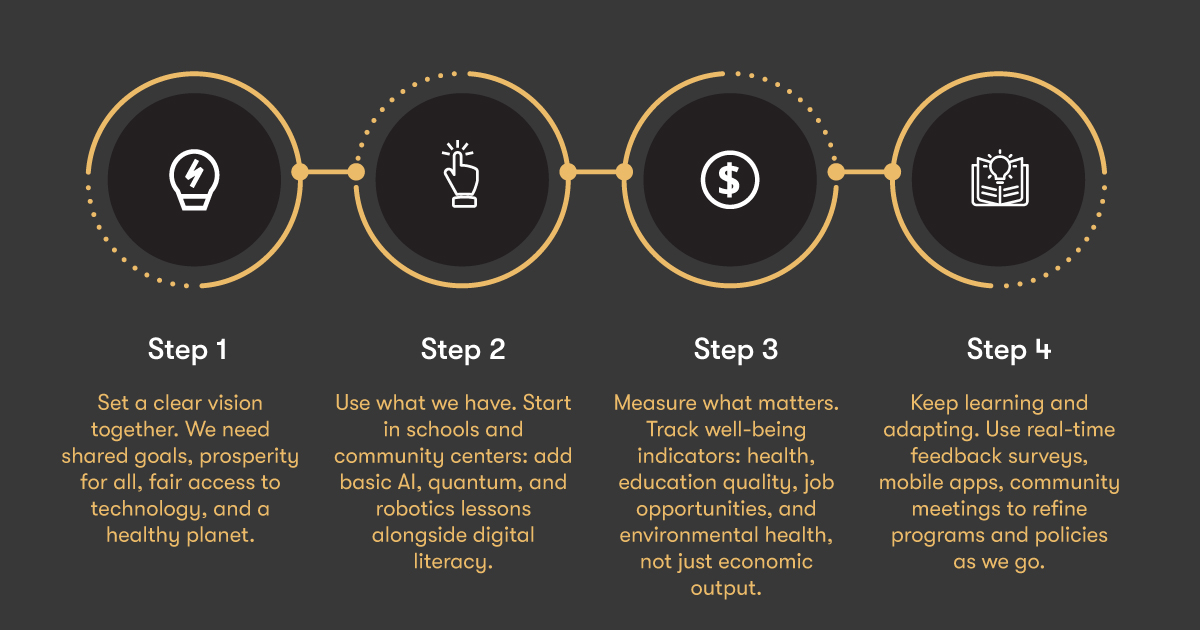
11. Actions We Can Take Today
I recommend a four‑step plan that makes change real and practical:
In Closing
The Great Convergence will reshape our world. By understanding these trends and taking smart, inclusive steps now, we can make sure it benefits everyone. Let’s work together to write the next chapter one where technology serves our shared human goals.
The views and opinions expressed in this blog are those of the author and do not necessarily reflect the official position or perspective of Photon.