Recap
What happens when quantum computing, AI, and quantum teleportation converge? You don’t just get faster systems, you create the nervous system that robots will rely on.
In Part 6, we explored how quantum infrastructure compresses decision cycles, synchronizes global systems, and enables real-time secure coordination.
Part 6 - Quantum Compute + Teleportation = Real-time, Global Intelligence
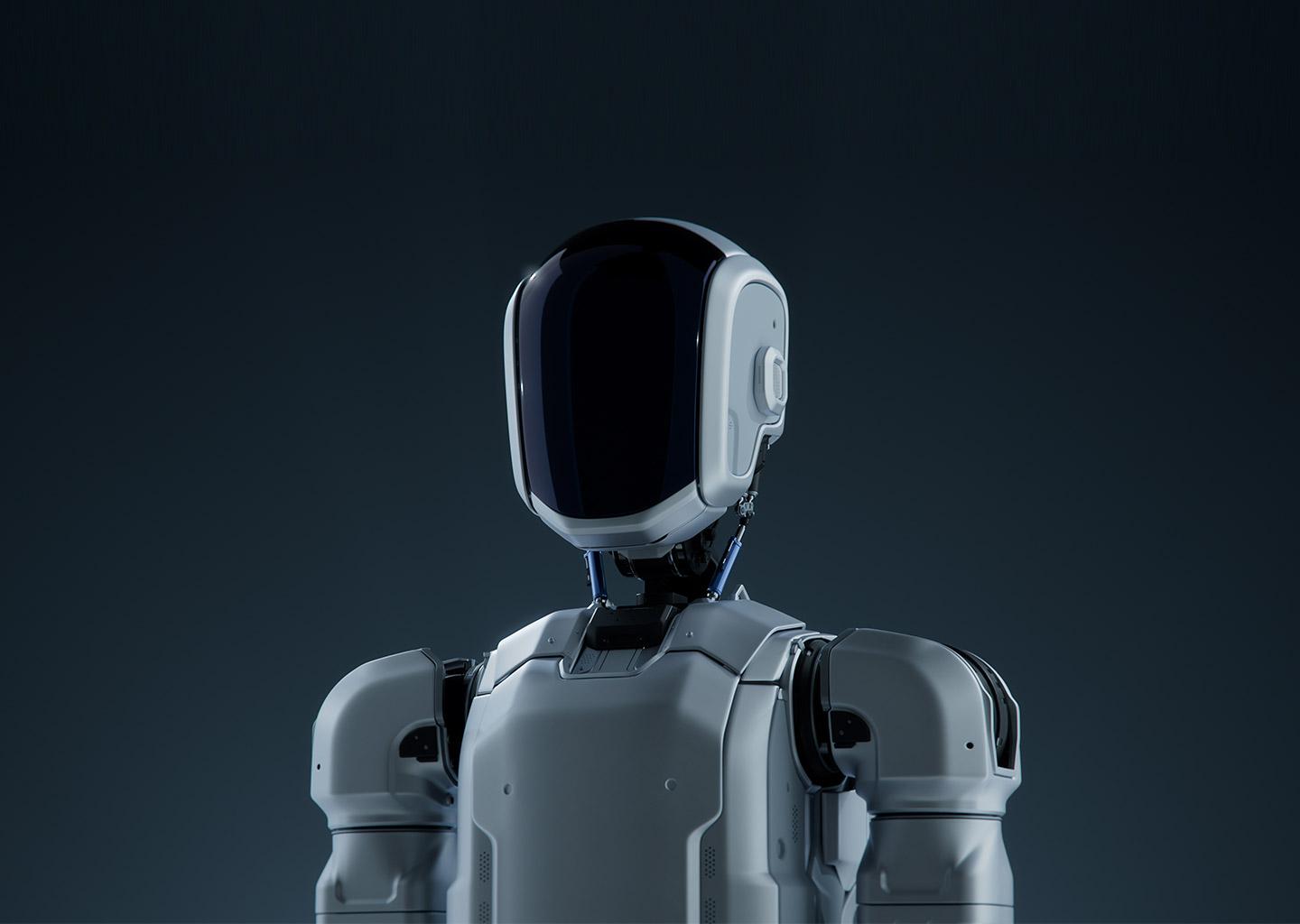
Now in Part 7, we move from intelligence to embodiment—where AI doesn’t just think, it acts.
Opening Hook
By 2030, the global service robotics market will exceed $200 billion and over 70 million frontline care hours could be automated annually, saving $150 billion in long-term care costs.
Bridge from Quantum
Quantum teleportation and ultra-low-latency links lay the groundwork for real-time, remote control of robotic systems.
Now, AI-driven robots can not only think at quantum speeds, they can move and manipulate our world with unprecedented precision.
Timing
Now (2026)
- Task-specific robots vacuum floors, inspect pipelines, sort cartons, and weld auto chassis in highly structured environments.
Next (2026–2030)
- Mobile manipulators stock retail shelves, prep simple meals, and manage logistics in semi-structured spaces.
- Surgical assistants integrate AR guidance and haptic feedback for minimally invasive procedures.
Later (2030+)
- Generalist robots learn on the fly: navigating homes, hospitals, and construction sites as collaborative teammates.
Synergy: AI × Robotics
| Domain | AI Capability | Robotics Outcome |
|---|---|---|
| Manufacturing | Predictive maintenance (↓ downtime by 30%) | Self-optimizing production lines (↑ throughput by 40%) |
| Logistics | Dynamic demand forecasting (↓ stockouts by 25%) | Autonomous shelf-stocking & last-mile delivery |
| Healthcare | AI diagnostics (↑ accuracy to 95%) | Tele-surgery and bedside assistance (↓ complication rates) |
| Retail | Personalized recommendations (↑ basket size by 20%) | Automated checkout & smart restocking |
| Construction | Real-time site simulation | Robotic 3D printing and precision demolition |
| Home Care | Fall-risk prediction (↓ incidents by 60%) | Care robots for meds, mobility support, companionship |
Key Milestones: Now / Next / Later
| Phase | AI Milestones | Quantum Milestones | Robotics Milestones |
|---|---|---|---|
| Now (2026) | Explainable DL models; transfer learning libs | Qubit coherence >100 µs; error rates <1% | High-precision actuators; reliable SLAM in GPS zones |
| Next | Edge multimodal reasoning; continual learning | 1,000+ logical qubits; proto fault-tolerance | 5-DoF mobile arms; compliant, human-safe control |
| Later | Ethical, autonomous AI; certification systems | Fault-tolerant, large-scale quantum machines | Generalist bots with onboard learning; modular design |
High-Impact Example: Home Care for Aging Boomers
The Challenge
By 2030, the U.S. will face a shortage of 1 million home-care workers, driving up care costs by 20%.
Now
Reminder bots prompt medications and alert families to anomalies.
Next
Mobile care robots assist with dressing, meal prep, and mobility while offering conversational companionship.
Impact:
- Falls reduced by 40%
- Loneliness-related healthcare costs reduced by 15%
- 80% of boomers can age in place, saving $150 billion+ in public and private care spending
Now / Next / Later: A Robotics Automation Trajectory
| Phase | Focus | Enablers |
|---|---|---|
| Now | Fixed, task-specific bots | Rule-based control; pre-mapped environments |
| Next | Context-aware mobile manipulators | SLAM; cloud-assisted planning; deep vision |
| Later | Generalist, self-learning agents | Reinforcement learning; modular hardware; edge AI |
Robotics as the Missing Layer
Brains (compute) + Nerves (quantum/comms) + Bodies (robots) = Full Autonomous Impact.
Robotics closes the loop: turning data and decisions into physical movement and real-world change.
Bridging Forward: From Automation to Autonomy
As robots grow more capable, we move from programming explicit tasks to teaching adaptable skills and safety norms.
The real test: embedding ethics, resilience, and collaboration into mechanical teammates.
Up Next: 8. The Great Convergence (2032–2035)
In the final post of the series, we’ll explore what happens when AI thinks, quantum solves, and robots act in unison.
The result: a paradigm-shifting moment for society, healthcare, and every industry.
The views and opinions expressed in this blog are those of the author and do not necessarily reflect the official position or perspective of Photon.