

Legacy Codebases
Monolithic design and hidden business logic hinder API integration; 50%+ of IT teams cite poor documentation as a barrier.
Home | Consulting | Engineering | CLOUD & LEGACY MODERNIZATION
Monolithic mainframes, scarce COBOL talent, and 20–40% of IT estate value locked up as technical debt. Photon runs both brute-force replacement and AI-infused modernization — with 160+ mainframe engineers and 1,500+ Java engineers on staff to do either.
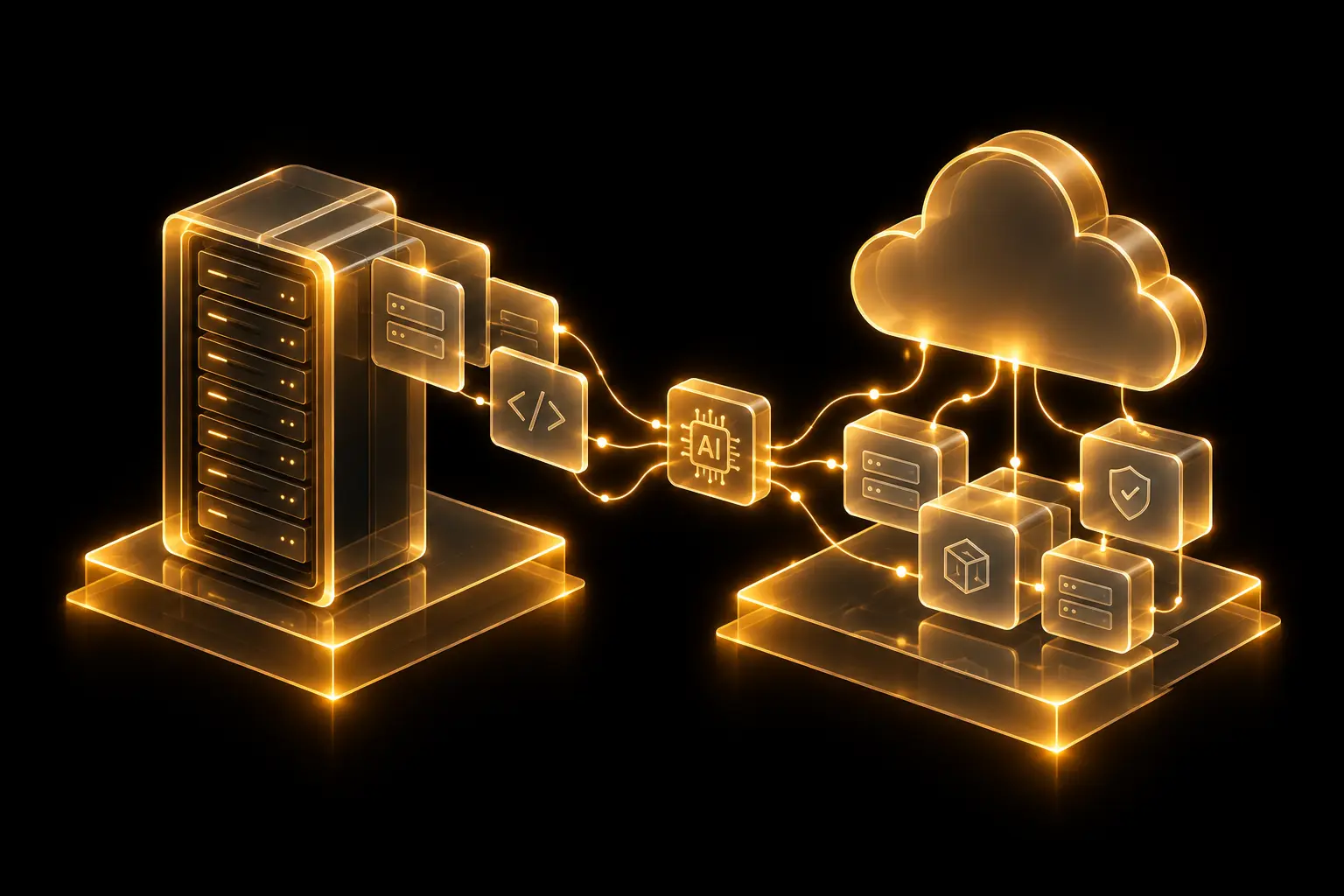
Monolithic design and hidden business logic hinder API integration; 50%+ of IT teams cite poor documentation as a barrier.

20–40% of IT estate value sits as technical debt — up to 40% slower development cycles result.

Skilled COBOL/PL-SQL engineers are retiring faster than they're replaced; modern developers avoid legacy stacks.

Legacy systems can consume 80–90% of IT budgets in licenses, hardware, and upkeep.
A handful of SMEs with decades of tribal knowledge and limited documentation. As they retire, cost and risk rise sharply — and new engineers don't want to work on legacy systems.
Legacy Architecture Talent
Modern Architecture Talent
COBOL, PL/SQL, MQ, CICS, Mainframes

 Languages & Tech
React, Java, Node.js, Python, Go, Kubernetes
Slow (3–6+ months), niche sourcing
 Hiring Speed
Fast (2–4 weeks), accessible channels
Long — tribal knowledge, minimal docs
 Ramp-Up Time
Short — modular codebases, AI copilots assist
Very high — retirement, attrition
 Retention Risk
Moderate — easier to cross-train and replace
Low — limited AI/ML exposure
 Innovation Readiness
High — native fluency with AI tools
160+
Mainframe engineers on staff
1,500+
Java engineers on staff
7
Countries sourced for modernization talent

A direct, “big bang” replacement of the entire system in one intensive project — clean break from technical debt, but high cost, long timelines, and limited code-conversion accuracy.

Best when architecture is deeply outdated or non-extensible.

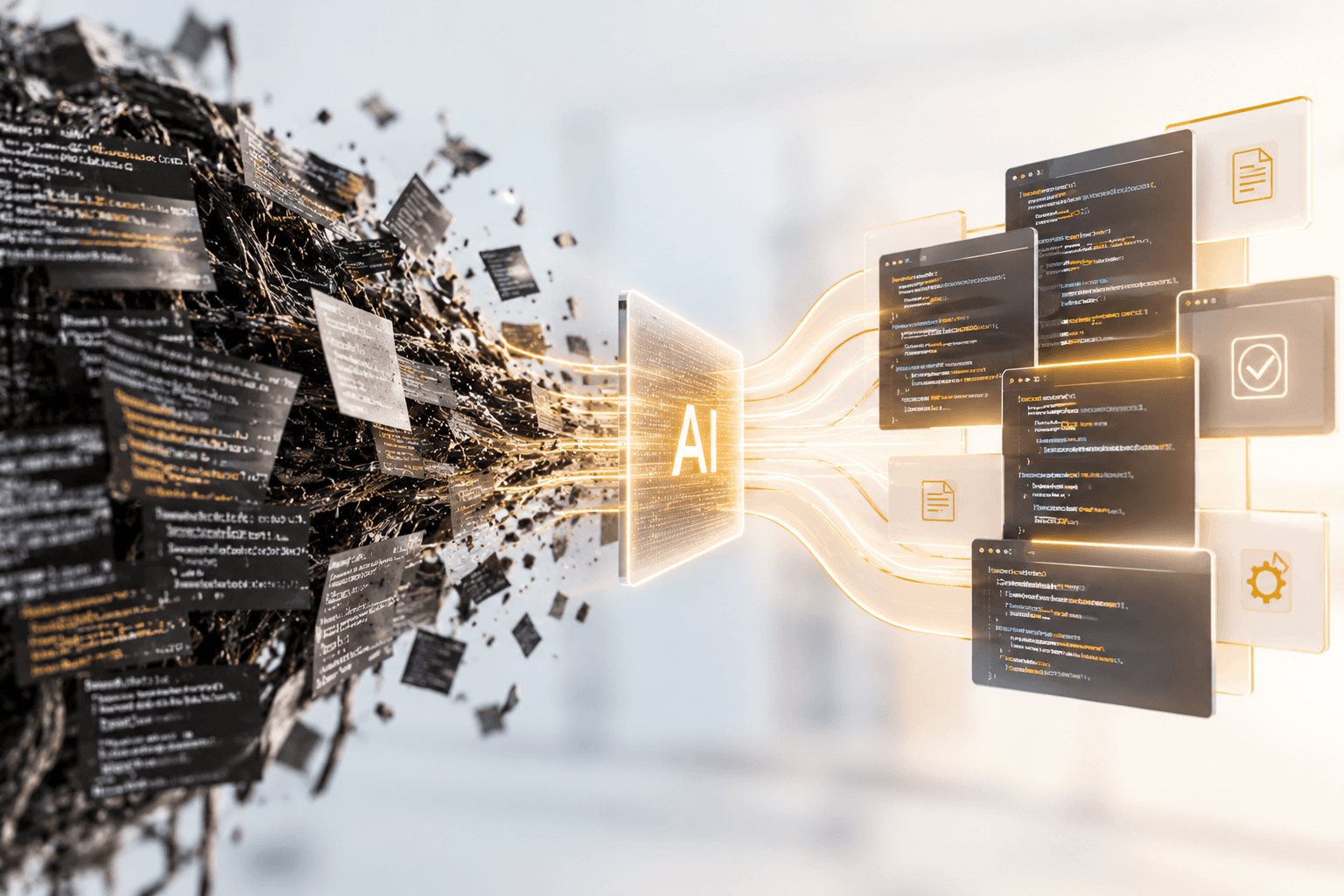
AI tools analyze legacy code, extract business rules, generate refactored code, and auto-build test suites — faster, cheaper, and better at preserving institutional knowledge.

Best for large codebases with complex business logic.

01
Catalogue every legacy asset, map dependencies, set quantified KPIs — the baseline and funding case.

02
Vetted language models, agent frameworks, governance controls, and cost dashboards — InfoSec-cleared from day one.

03
Convert millions of lines of opaque legacy code into a searchable knowledge graph of components, data flows, and business rules.

04
Autonomous agents translate and refactor legacy modules into cloud-native microservices, validated side-by-side with the legacy system.

05
Continuous automated test generation, runtime drift monitoring, and audit-ready evidence packs for every release.


Migrated from IBM DataPower to Apigee's cloud-native capabilities on Google Cloud Platform, with a focus on governance, security, and analytics.
A global multinational investment bank
Decomposing a legacy mainframe mutual funds platform into containerized microservices on Kubernetes, with Kafka for real-time data streaming.
A global multinational investment bank
AI-assisted migration from TIBCO to a modern RESTful architecture using Spring Framework and z/OS Connect, delivered in phases starting with a validated POC.

A global resort and casino operator
AI-assisted code translation reduced average processing time to 15 minutes per task, consolidating information across sources with dashboards available in minutes.
A major U.S. banking group
Transition and ongoing operations of a core API management infrastructure, with security baselines, drift monitoring, and comprehensive logging.

A global asset management and brokerage firm
Mainframe infrastructure transition to a Java-based microservices architecture, with dedicated squads of mainframe and Java engineers planning the cutover.